2026 How to Choose the Right Emergency Relief Valve for Safety and Efficiency?
In the field of industrial safety, the choice of an Emergency Relief Valve is critical. Renowned expert Dr. John Harris stated, “Selecting the right valve can prevent costly failures and enhance safety.” A well-chosen Emergency Relief Valve ensures optimal protection for systems under pressure.
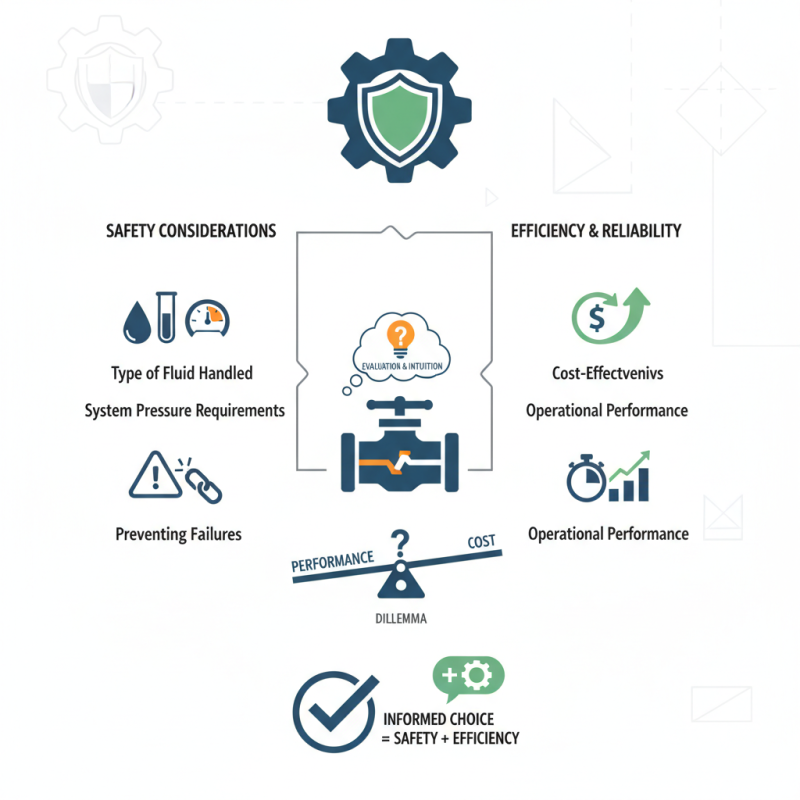
Effective valve selection combines reliability and efficiency. Factors include the type of fluid handled and system pressure requirements. Engineers often face dilemmas when balancing performance and cost. The wrong choice could lead to hazardous situations or operational inefficiencies.
Understanding the intricacies involved in selecting an Emergency Relief Valve is vital. It requires careful evaluation and often, a dose of professional intuition. Sometimes, even seasoned professionals second-guess their decisions. The stakes are high, and the consequences of mistakes can be severe. Therefore, making an informed choice is essential for both safety and operational efficiency.
Understanding Emergency Relief Valves: Purpose and Importance
Emergency relief valves (ERVs) play a crucial role in various industrial applications. Their main purpose is to prevent overpressure situations that could lead to equipment failure or catastrophic incidents. According to the American Petroleum Institute, the correct sizing and selection of ERVs can enhance system performance by up to 30%.
Choosing the right ERV involves understanding its design and operational parameters. Factors such as pressure rating, temperature limits, and flow capacity should be considered. A common mistake is underestimating the importance of these factors, which can lead to inefficient operations. Revolutionary studies, like those from the International Journal of Pressure Vessel and Piping, underscore that over 25% of equipment failures are attributed to incorrect valve selection.
Tip: Always consult with industry experts during the selection process. Evaluate historical system performance data to guide your choices.
From a safety perspective, effective ERVs can save lives and reduce downtime. However, many still overlook regular inspections and maintenance. Research from the National Board of Boiler and Pressure Vessel Inspectors reveals that improper maintenance accounts for almost 15% of ERV failures. Keeping maintenance logs and adhering to inspection schedules can bridge these gaps.
Tip: Establish a routine inspection plan for your ERVs to ensure safety and reliability. This small step can lead to significant benefits.
Key Factors to Consider When Selecting an Emergency Relief Valve
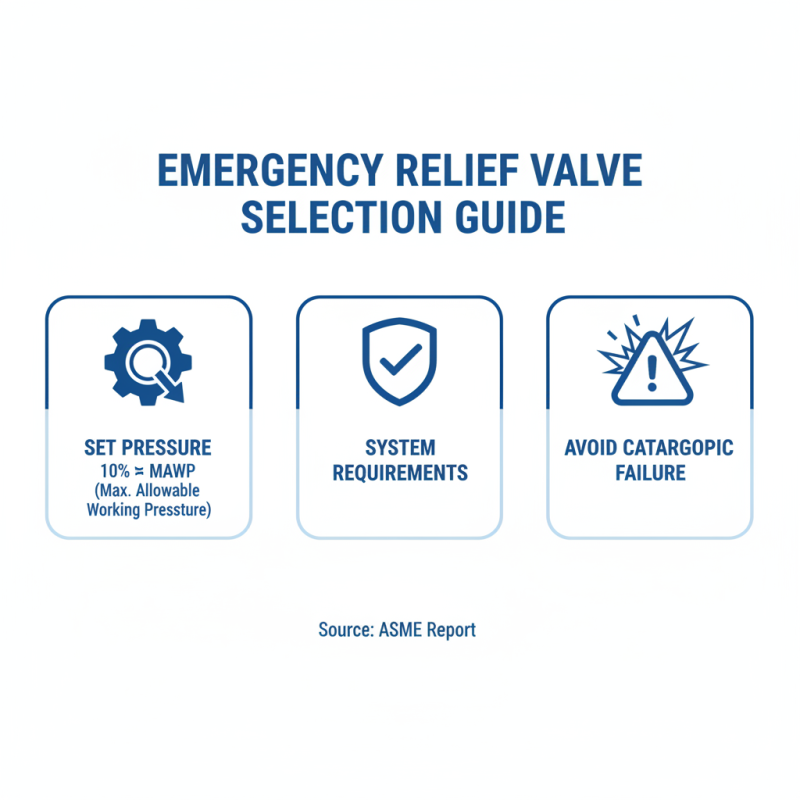
When selecting an emergency relief valve, several key factors come into play. The valve's set pressure should align with system requirements, which ideally should be 10% lower than the maximum allowable working pressure (MAWP). A report from the American Society of Mechanical Engineers highlights that improper selection can lead to catastrophic failures.
Material compatibility is crucial. Different environments expose valves to various corrosive substances. According to data from the Chemical Safety Board, material failure due to corrosion accounted for 30% of relief valve incidents. Knowing the right materials can enhance reliability.
Sizing the valve correctly is another vital aspect. A valve too small may not react in time, while one that’s too large can cause undesirable fluctuations in pressure. The National Fire Protection Association recommends regular testing and recalibrating for optimal function. Many companies overlook this, leading to inefficiencies and safety risks. Understanding how these factors interact is essential for making informed decisions.
Types of Emergency Relief Valves and Their Applications
Emergency relief valves (ERVs) play a critical role in maintaining safety and efficiency in industrial systems. Various types of ERVs are suitable for different applications. For example, a spring-loaded valve is commonly used in pressure relief scenarios. It opens when a preset pressure is reached, allowing excess pressure to escape. In contrast, a pilot-operated valve provides more precise control. This valve type is typically used in systems where pressure fluctuations are frequent.
Data from industry reports suggest that improper selection of an ERV can lead to system inefficiencies. Approximately 40% of companies face increased operating costs due to incorrect valve sizing. Moreover, over 30% of equipment failures relate to inadequate pressure management. This emphasizes the importance of understanding the specific application requirements before selecting an ERV.
Another key point is the need for regular maintenance. An ERV can only operate effectively if it is in good condition. Research indicates that nearly 25% of ERVs fail during their first year due to neglect. Regular inspections and timely replacements can prevent these issues. Choosing the right valve and maintaining it diligently can safeguard both productivity and safety in industrial operations.
2026 How to Choose the Right Emergency Relief Valve for Safety and Efficiency?
| Valve Type |
Material |
Pressure Rating (psi) |
Temperature Range (°F) |
Applications |
| Spring-Loaded |
Stainless Steel |
150-600 |
-20 to 400 |
Chemical Processing, Oil & Gas |
| Pilot-Operated |
Carbon Steel |
200-1500 |
-20 to 250 |
Refineries, Power Plants |
| Safety Relief |
Brass |
50-300 |
-10 to 200 |
Steam Boilers, HVAC Systems |
| Triple Duty Valve |
Ductile Iron |
75-300 |
-40 to 180 |
Water Systems, Agriculture |
Assessing Compatibility: Materials and Specifications for Efficacy
When selecting an emergency relief valve, compatibility is crucial. Different materials react uniquely under various conditions. For instance, stainless steel is resistant to corrosion, making it suitable for harsh environments. However, it can be more expensive than alternatives. PVC valves are cost-effective but may not withstand high temperatures or pressure.
Understanding pressure specifications is also important. A valve must meet the requirements of the system it will serve. Overlooking this can lead to malfunction or failure. It’s essential to assess the pressure range and thermal conditions beforehand. Often, users choose valves without thorough research, leading to compatibility issues down the line. Knowledge gaps in this area can result in significant safety hazards.
Manufacturers often provide specifications and compatibility guidelines. However, not all users pay close attention. Users may overlook these details, leading to poor performance. It’s vital to double-check that materials align with the application needs. Misjudgments in this process can lead to inefficiency or even dangerous situations. Always consider the long-term implications of your choices in valve selection.
Installation and Maintenance Best Practices for Safety and Efficiency
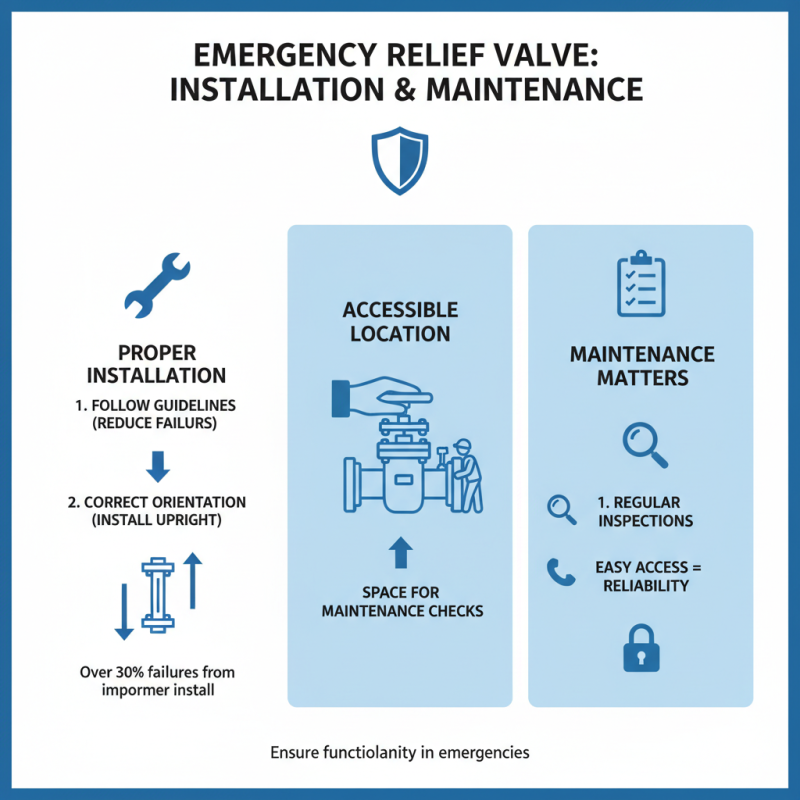
When selecting an emergency relief valve, installation and maintenance are pivotal. Proper installation ensures that the valve functions correctly during emergencies. According to industry reports, over 30% of valve failures are linked to improper installation. It is crucial to follow guidelines meticulously. Ensure that the valve is installed in a location with accessible space for maintenance. Orientation matters. If not installed upright, issues may arise, affecting efficiency.
Regular maintenance checks can significantly enhance the reliability of emergency relief valves. A National Fire Protection Association report suggests that 40% of failures occur due to lack of maintenance. Inspect seals, adjust settings, and check for rust or corrosion frequently. This proactive approach reduces the risk of malfunction and extends the valve's lifespan.
Tips: Always document maintenance activities in a log. A complete record helps identify patterns. Keep spare parts on hand to reduce downtime during repairs. Educate staff on potential problems like vibration or temperature changes affecting performance. Continuous learning in regular updates is key to improving safety and efficiency.