How to Choose the Right Vacuum Breaking Valve for Your System?
Choosing the right Vacuum Breaking Valve is crucial for system efficiency. Dr. James Harlow, a renowned expert in fluid dynamics, emphasizes, “Selecting the correct valve can prevent costly operational failures.” This statement highlights the importance of expertise in this field.
Vacuum Breaking Valves serve a vital function in various industries. Their role is to prevent vacuum conditions that can lead to pipeline damage. However, the selection process can be complex. Factors such as pressure ratings, materials, and flow rates must be considered. A poorly chosen valve can result in significant system issues and safety concerns.
It’s essential to reflect on the specific needs of your system. Understanding the operating environment is key. Consultation with specialists can provide valuable insights. In many cases, overlooked details can lead to unexpected challenges. Taking the time to evaluate options thoroughly can lead to better performance and reliability.

Understanding Vacuum Breaking Valves and Their Applications
Vacuum breaking valves are essential in various applications, preventing detrimental vacuum conditions in systems. These valves allow air to enter the system when the pressure drops excessively. Understanding your system's needs is critical for effective use.
Failure to select the right valve can lead to system failure and costly repairs.
Choosing the right valve depends on several factors. One must consider the pressures involved, the media being transported, and the installation location.
A valve that works well in a specific condition may underperform in a different setup. Proper research is necessary to avoid mismatches.
Tips: Always consult with experts during selection. They can provide invaluable insights tailored to your specific application. It's also wise to review case studies of similar applications for real-world insights.
Evaluate performance records for reliability in the long term. Identifying potential issues early can save time and money later on.
Key Factors to Consider When Selecting a Vacuum Breaking Valve
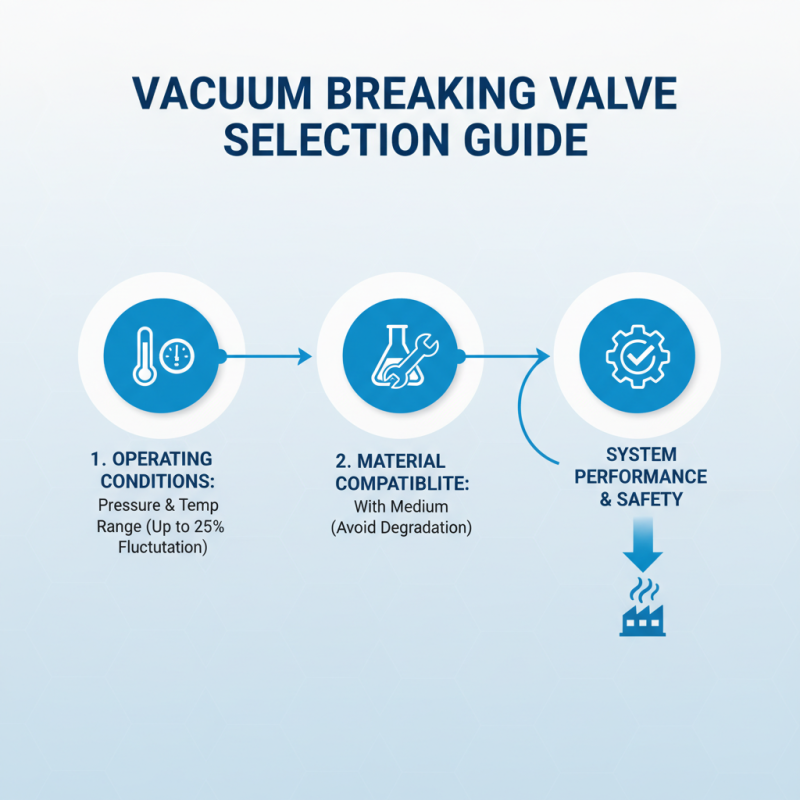
When selecting a vacuum breaking valve, several key factors emerge that can significantly influence system performance. One important aspect is the application's operating pressure and temperature ranges. For instance, valves must withstand variations, with industry standards noting that pressure fluctuations can reach up to 25% during operation. Additionally, the material composition of the valve must align with the medium involved. A mismatch could lead to degradation, posing a risk to safety and efficiency.
Another critical factor is the size and flow rate of the valve. As outlined in engineering studies, a valve that is too small can restrict flow, causing pressure drops and increasing the system's energy consumption by as much as 15%. Experts recommend conducting a thorough flow analysis to determine the right valve dimensions that match the system’s requirements. Moreover, installation location is essential. Proper placement can minimize pipe stress and reduce maintenance needs. The complexity of installation may lead to costly errors if not assessed correctly.
It's vital to also consider the valve's maintenance requirements. Many valves require periodic inspections and servicing. A report by the International Society of Automation highlights that neglecting maintenance can lead to a 30% increase in operational failure rates. Understanding these nuances plays a crucial role in making informed decisions that ensure long-term reliability and system integrity.
Types of Vacuum Breaking Valves: Pros and Cons
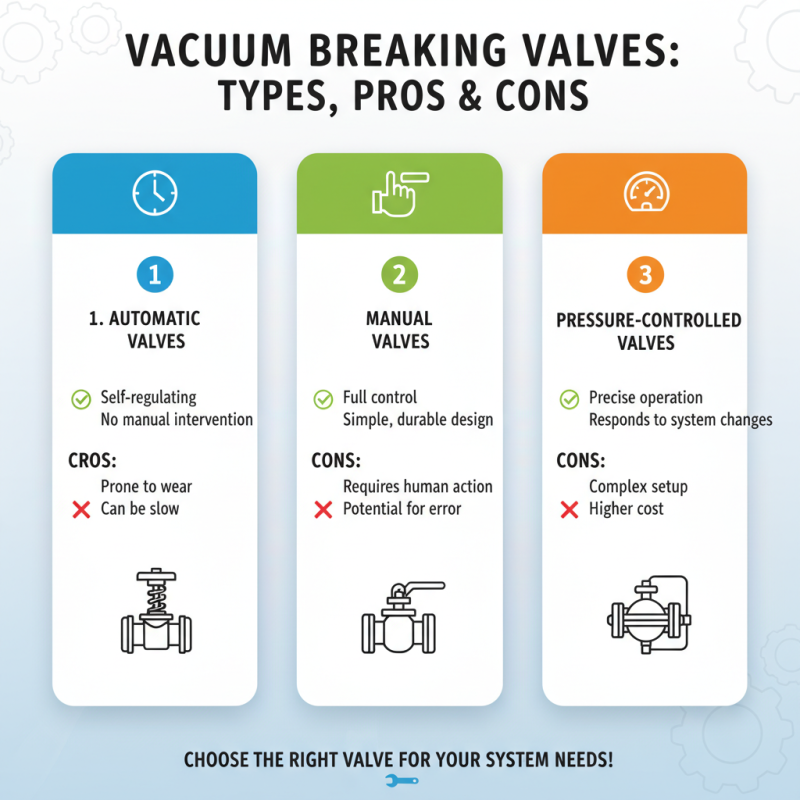
When selecting a vacuum breaking valve, understanding the different types available is crucial. Each type has unique characteristics, benefits, and disadvantages. Common types include automatic valves, manual valves, and pressure-controlled valves.
Automatic vacuum breaking valves work without human intervention. They rapidly respond to changes in pressure, allowing for continuous operation. However, they may require more maintenance over time. Manual valves offer more control but can be labor-intensive. They rely heavily on proper timing and user attention, which can lead to mistakes. Pressure-controlled valves provide good stability. Yet, they can be pricey and complex to install.
Tips for choosing the right valve involve assessing system requirements. Understand the pressure ranges and flow rates specific to your operation. Inspect the materials used in the construction to ensure compatibility with your fluids. Consider the environment, as certain valves may not withstand harsh conditions. Another tip is to consult industry experts for advice tailored to your situation. Their insights can help refine your choices, leading to a more efficient setup.
Installation Guidelines for Vacuum Breaking Valves in Systems
When installing vacuum breaking valves, proper guidelines are crucial for system efficiency. An industry report from the
American Society of Mechanical Engineers (ASME) emphasizes that improper installation can lead to serious issues, such as system failures and costly downtime.
Ensuring that the valve is installed at the right location minimizes risks of vacuum pockets in the piping. Typically, this location should be upstream of the pump to maintain optimal flow conditions.
Additionally, proper seating of the valve is essential. A recent study indicated that 40% of failures are linked to improper seating.
Ensuring the valve is aligned correctly can prevent leaks and maintain performance. Using the correct sealing materials is also important, as they must withstand the specific pressures in your system.
Regular checks are required too, as wear and tear can compromise function.
Always consult the relevant industry standards when installing vacuum breaking valves. International guidelines recommend routine maintenance checks every six months.
These practices can enhance reliability and efficiency over time. They may seem like small steps, but they play a significant role in the overall effectiveness of your system.
Consider evaluating your installation process to identify areas for improvement.
Maintenance Best Practices for Optimal Valve Performance
When it comes to vacuum breaking valves, maintenance is key to ensuring optimal performance. Regular inspections play a crucial role. Check for any leaks or signs of wear. Over time, valve components can degrade. A small issue can lead to major problems if overlooked.
One essential tip is to clean the valve periodically. Dirt and debris can significantly hinder its function. Using compressed air or a soft brush can make a difference. Ensure that the valve seat is free of obstructions. A clean valve operates more effectively and extends its lifespan.
Another important practice is to monitor the operating pressure. Fluctuations may indicate underlying issues. If the pressure is unstable, investigate potential causes. Prompt identification of problems can save time and resources. Ignoring these signs can lead to unexpected failures. Regular maintenance checks can help you stay ahead. Being proactive protects your investment and maintains system integrity.