How to Choose the Right Fire Arrestor for Your Needs?
Selecting the appropriate Fire Arrestor can significantly enhance safety in various environments. Reports indicate that fire-related incidents lead to billions in damages annually, underscoring the need for effective protection. A well-chosen Fire Arrestor not only mitigates risks but also complies with fire safety regulations.
When considering a Fire Arrestor, understanding your specific needs is crucial. Different environments require varying protections. For instance, industrial settings often face unique fire hazards compared to residential areas. Research shows that many organizations underestimate the importance of a tailored approach.
However, selecting a Fire Arrestor isn't without challenges. Misconceptions about their effectiveness can lead to improper choices. It is essential to consult reliable sources and industry experts for guidance. A deeper evaluation of materials and technology can ensure that you invest in a safe, efficient solution.
Factors to Consider When Selecting a Fire Arrestor
Selecting the right fire arrestor requires careful consideration of various factors. The type of environment plays a crucial role. For instance, industrial settings may need heavy-duty models. Residential areas can often rely on lighter options. Think about potential fire hazards in your space. This understanding will guide your choice.
Another important factor is the size of the arrestor. It should match the specific area where it will be used. Measure the space accurately. A too-small arrestor will not be effective. Conversely, an oversized model might be cumbersome and under-utilized.
Installation and maintenance are also key considerations. Some arrestors are complex and require professional installation. Others may be user-friendly, allowing for easier setup. Think about the maintenance needed for your selected model. Regular checks can prevent failures in critical moments. Your decision should balance functionality with ease of use.
Types of Fire Arrestors Available and Their Applications
When selecting a fire arrestor, understanding the types available is crucial. Fire arrestors can be broadly categorized into passive and active types. Passive fire arrestors work by containing or slowing down the spread of fire. These include fire-resistant walls, doors, and barriers. They do not require power or maintenance. On the other hand, active fire arrestors use mechanical systems. Examples include sprinklers and smoke control systems. They directly combat fire but need regular testing and upkeep.
Different applications require specific fire arrestor types. In residential settings, passive options may suffice. However, commercial establishments often need advanced active systems. Consider the building's layout, occupancy type, and potential fire hazards. For instance, industrial sites often handle flammable materials and require a robust system. Always conduct a thorough risk assessment. This ensures compliance with safety regulations and effective fire management. Understanding local codes is vital, as requirements can differ significantly.
Choosing a fire arrestor isn't straightforward. Each situation is unique. Consultation with fire safety professionals can offer valuable insights. Their expertise helps tailor solutions to specific needs. It's essential to review and update fire safety measures regularly. As environments change, so do risks. Evaluation and adjustments ensure ongoing protection.
How to Choose the Right Fire Arrestor for Your Needs?
| Type of Fire Arrestor |
Application |
Material Used |
Installation Requirements |
Maintenance Frequency |
| Water Mist Arrestor |
Commercial kitchens, industrial settings |
Aluminum, Stainless Steel |
Requires proper plumbing and water supply |
Annual inspection |
| Chemical Fire Arrestor |
Laboratories, manufacturing plants |
Specialized fire retardant foam |
Expert installation required |
Semi-annual maintenance |
| Electromagnetic Fire Arrestor |
Data centers, server rooms |
Metal alloys |
Requires a power source |
Monthly checks |
| Dry Powder Fire Arrestor |
Automotive, marine applications |
Inert powder, typically sodium bicarbonate |
Easy to install |
Every 6 months |
| Foam Fire Arrestor |
Oil & gas industries, chemical storage |
Polymer-based foam |
Complex installation needed |
Annual inspection |
Understanding Fire Safety Ratings and Standards
When selecting a fire arrestor, understanding fire safety ratings and standards is crucial. Fire safety ratings help determine how effectively a product can resist and contain fire. Various organizations establish these standards, ensuring consistent safety measures across different types of products. The most well-known standards include UL, NFPA, and ASTM, each serving a unique purpose.
It's important to consider the specific environment where the fire arrestor will be used. For example, industrial settings might require a different rating than residential areas. Think about the materials present, as well as the potential fire sources. High-risk areas may need more robust fire arrestors. Understanding these nuances contributes to making informed choices.
While ratings provide guidance, not all products are foolproof. There can be differences in manufacturing quality that impact performance. Regular assessment and maintenance of the arrestors are necessary to ensure they function as expected. It is critical to remain vigilant and stay updated on new standards as technology evolves. Reflecting on these factors will lead to better safety decisions in fire prevention.
Installation Requirements for Different Fire Arrestors
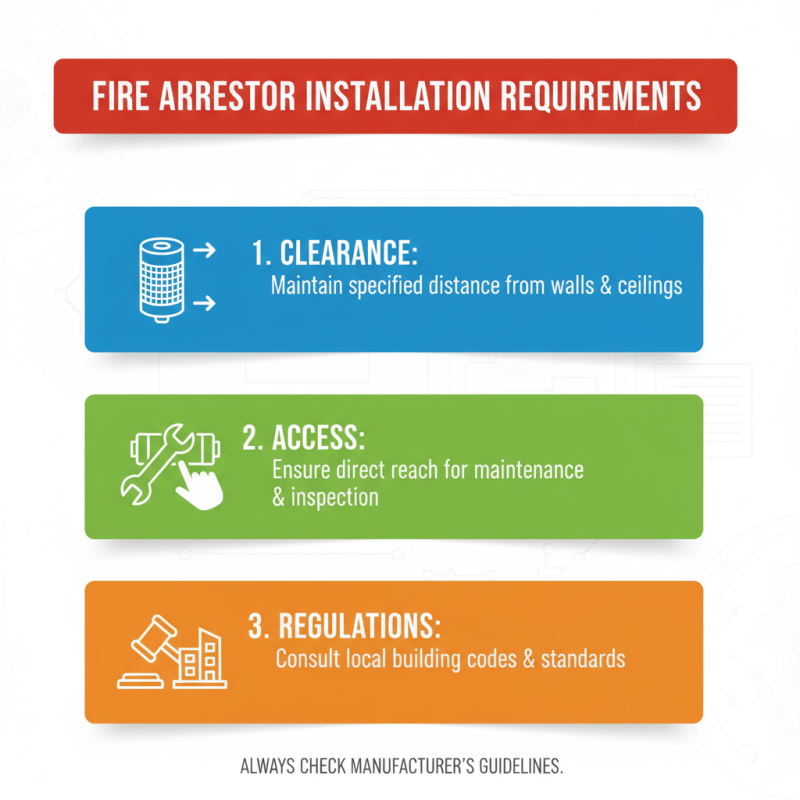
When selecting a fire arrestor, installation requirements are critical. Different types of fire arrestors have unique specifications that must be met. For instance, some may need a specific amount of clearance from walls and ceilings. Others may require direct access for maintenance. It’s essential to check local building codes and regulations before installation.
Additionally, the environment where the fire arrestor will be placed affects installation. A fire arrestor in a high-humidity area may need different installation methods compared to one in a dry space. Proper sealing is crucial for a tight fit. Insufficient sealing can compromise effectiveness, leading to unsafe conditions.
It’s also wise to assess the material. Certain materials may require special tools and techniques for installation. Always consider future accessibility. If maintenance is a hassle, it might discourage regular checks, rendering the arrestor less effective. Being proactive about these elements can make a significant difference in safety and compliance.
Maintenance Tips for Optimal Fire Arrestor Performance
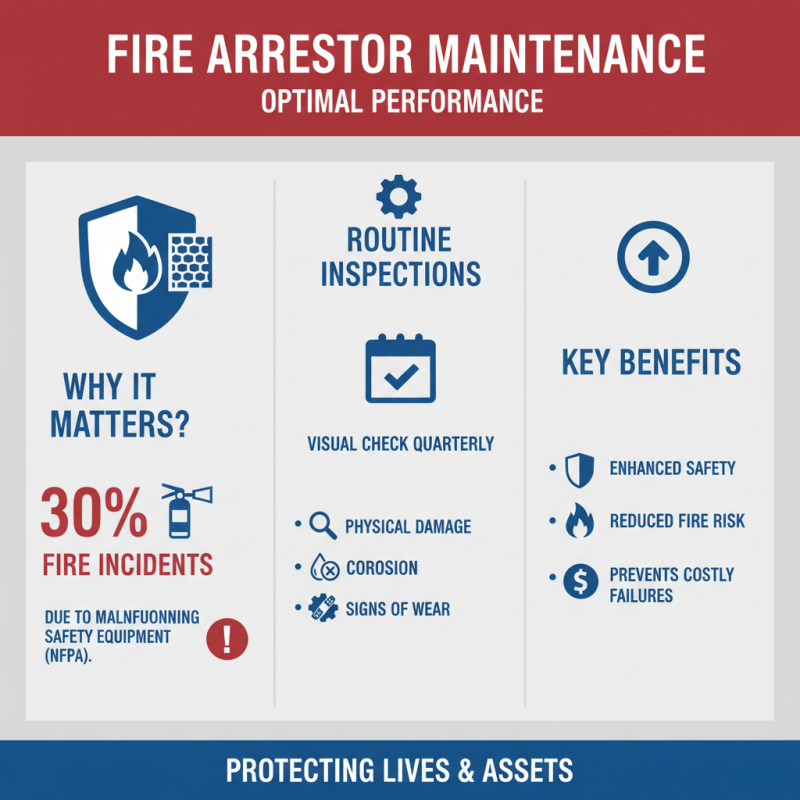
Regular maintenance of fire arrestors is crucial for ensuring their effectiveness. According to the National Fire Protection Association (NFPA), nearly 30% of fire-related incidents are attributed to malfunctioning safety equipment. This statistic highlights the necessity of routine inspections. Check for physical damage, corrosion, or signs of wear that could compromise performance. A visual inspection should be conducted at least once every quarter.
Cleaning is another vital aspect often overlooked. Dust and debris can accumulate, affecting the fire arrestor's functionality. The International Fire Chiefs Association recommends cleaning fire arrestors every six months to maintain optimal performance. Use appropriate cleaning agents that won’t harm the equipment. Failure to clean can diminish effectiveness and increase risk.
Training personnel on handling and reporting issues with fire arrestors is equally important. Many incidents occur due to human error, rather than equipment failure. Comprehensive training programs can reduce mistakes. Research indicates that organizations with regular safety training see a 50% reduction in accidents. Continuous monitoring and evaluation will enhance the overall safety measures related to fire management systems.