Top 10 Emergency Relief Vents in China You Need to Know?
In emergency situations, the role of an Emergency Relief Vent is critical. These devices help to alleviate pressure in various systems, ensuring safety and functionality during crises. In China, several innovative products have emerged to meet this demand. Understanding these options can save lives and protect property.
The top 10 Emergency Relief Vents highlighted in this guide were chosen based on their performance and reliability. Each product offers unique features tailored to different environments and scenarios. Some require expert installation, while others are user-friendly. This diversity creates both opportunities and challenges for users.
Navigating the choices can be overwhelming. Knowledge empowers users to make informed decisions. With proper research, individuals and organizations can identify the best Emergency Relief Vent to suit their needs. The right choice can have lasting implications in emergency response.
Overview of Emergency Relief Vents in China
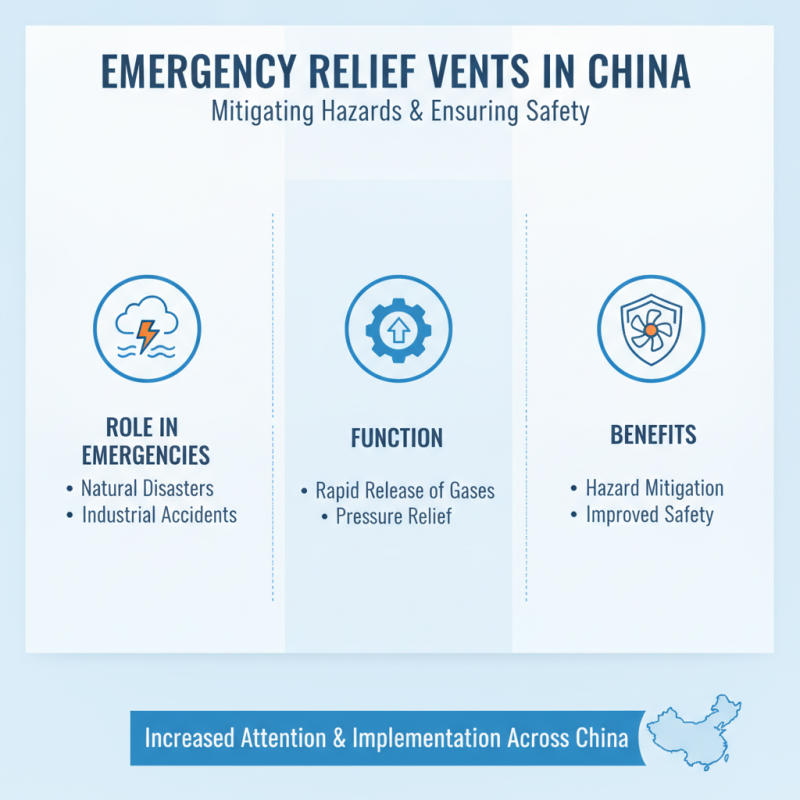
In recent years, emergency relief vents have gained significant attention in China. These devices play a crucial role during emergencies, such as natural disasters or industrial accidents. The need for efficient ventilation systems cannot be overstated. They help mitigate hazards by allowing rapid release of gases and pressure.
Many facilities prioritize the installation of these vents. However, some designs may overlook local climate conditions. This oversight can lead to inefficiencies. The effectiveness of a vent is only as good as its engineering. Proper maintenance is equally important. Regular checks can prevent blockages that hinder functionality.
Training personnel in proper usage is essential. Many incidents occur due to human error during emergencies. Understanding the technology behind these vents can enhance safety protocols. Engaging with local experts ensures compliance with regulations. There is a growing need for innovation in this field. The challenge is to develop solutions that blend reliability and efficiency.
Criteria for Selecting Emergency Relief Vents
Selecting the right emergency relief vents is crucial for safety and efficiency. Various sectors, including manufacturing and chemical processing, rely heavily on these devices. According to a recent industry report by the National Safety Council, inadequate pressure relief systems contribute to 30% of industrial accidents. Thus, understanding selection criteria ensures risks are minimized.
One significant factor is the vent’s capacity. Proper sizing is essential; a vent that is too small can fail to release excess pressure. Analysts recommend using software tools to compute necessary specifications. Regular testing and maintenance of these vents are also vital. Over time, wear and tear can affect performance. Ignoring this can lead to catastrophic failures.
Material compatibility is another critical element. Vents should resist corrosion and high temperatures. A mismatch can cause leaks or rupture. Observations suggest that 25% of failures stem from improper material selection. Therefore, reviewing the operating conditions is key for making informed choices. Attention to detail in these areas can improve safety significantly.
Top 10 Emergency Relief Vents in China You Need to Know
This chart displays the capacity of the top 10 emergency relief vents in China, measured in cubic meters per hour (m³/h). Understanding the capacity of these vents is crucial for effective emergency management and safety protocols.
Top 10 Emergency Relief Vents in China
When discussing emergency relief vents in China, it is essential to understand their role in crisis management. These vents are crucial for controlling pressure and ensuring safety during emergencies. The proper design and implementation can significantly affect outcomes. They are built to withstand high stress and prevent catastrophic failures.
Several types of emergency relief vents exist, each serving different needs. Some are simple, while others are more complex. For instance, pressure relief valves can activate at specific thresholds. This precision is critical to avoid accidents. However, improper installation can lead to failures. Regular maintenance is necessary to ensure reliability. Many facilities underestimate this aspect, which can have dire consequences.
Investing in emergency relief vent systems is not just about compliance. It is about safeguarding lives and property. Awareness of how these systems function can prevent disastrous situations. Human error often leads to neglect in system checks. As industries advance, the need for efficient and reliable relief vents grows. Understanding their importance is vital for any operation involved in hazardous processes.
Case Studies of Effective Emergency Relief Vents
In China, emergency relief vents play a crucial role during natural disasters. For instance, some cities have implemented innovative flood response strategies. In one case, local authorities designed temporary drainage systems that quickly diverted water from heavily flooded areas. This approach reduced damage and allowed communities to recover faster.
Another effective case involved earthquake preparedness. Engineers developed lightweight, portable shelters that can be transported quickly. These shelters can house families displaced by seismic events. Feedback from affected communities highlighted the importance of quick access to safe spaces. Yet, the distribution process sometimes faced delays, showcasing the need for more efficient logistics.
Training volunteers is equally vital. One initiative focused on equipping locals with rescue skills, emphasizing hands-on experience. However, reliance solely on volunteers can be risky if not properly managed. Issues with communication and coordination often arise during emergencies, revealing gaps in preparedness strategies. Continuous improvement is essential for effective disaster response in these communities.
Future Trends in Emergency Relief Vent Technologies in China
In recent years, emergency relief vents in China have seen significant advancements. Data from the China National Emergency Management Office indicates a growing need for efficient ventilation systems during natural disasters. The increase in urban populations heightens the potential for crowded shelters, making effective air circulation crucial.
Current trends highlight automation and IoT integration. These technologies improve responsiveness, allowing for real-time data analysis and quick adjustments. A report by the National Bureau of Statistics reveals that automated systems can reduce response times by up to 30%. However, many systems still depend on manual operation, reflecting the need for further innovation.
Sustainability is emerging as a key factor, with a focus on using eco-friendly materials. A study from the Institute of Environmental Studies suggests that integrating green technology could reduce the carbon footprint of emergency systems by 40%. This presents both a challenge and an opportunity for developers in the sector. Addressing these gaps requires a dedicated approach to R&D and collaboration among stakeholders in the industry.
Top 10 Emergency Relief Vents in China You Need to Know
| Rank |
Type |
Material |
Application Area |
Performance Rating |
| 1 |
Pipeline Vent |
Stainless Steel |
Oil & Gas |
95% |
| 2 |
Explosion Relief Vent |
Aluminum |
Chemical Plants |
98% |
| 3 |
Pressure Relief Valve |
Bronze |
Manufacturing |
97% |
| 4 |
Vacuum Relief Vent |
Plastic |
Storage Tanks |
93% |
| 5 |
Fire Relief Vent |
Steel |
Power Plants |
99% |
| 6 |
Atmospheric Vent |
Cast Iron |
Waste Treatment |
92% |
| 7 |
Emergency Vent |
Composite |
Pharmaceuticals |
96% |
| 8 |
Safety Vent |
PVC |
Food Industry |
94% |
| 9 |
High-Pressure Vent |
Carbon Steel |
Gas Processing |
99% |
| 10 |
Dome Vent |
Fiberglass |
Marine Applications |
95% |