Top 10 Vacuum Breaking Valves at China Import Export Fair?
The global market for Vacuum Breaking Valves has gained significant attention in recent years. According to a recent industry report, the demand for these valves is expected to grow at a rate of 6% annually. "Vacuum Breaking Valves are essential for the safety and efficiency of many industrial applications," says Dr. Emily Chen, a noted expert in fluid dynamics. During the upcoming China Import Export Fair, potential buyers will have the opportunity to explore a variety of innovative solutions.
This event, scheduled from April 15 to May 5, 2026, will showcase cutting-edge technologies, including AI-driven tools for efficient supplier selection. Visitors can navigate the vast exhibition space of 1.55 million square meters. They can find certified suppliers quickly, but the sheer size can be overwhelming. Suppliers of Vacuum Breaking Valves must highlight their unique selling points to stand out.
Experts emphasize the importance of rigorous certification processes for these valves. Many products lack adequate quality assurance. There’s a pressing need for buyers to focus on trusted manufacturers that comply with ISO and CE standards. The future of the Vacuum Breaking Valve industry relies on innovation and maintaining consistent quality.

Overview of Vacuum Breaking Valves in Industrial Applications
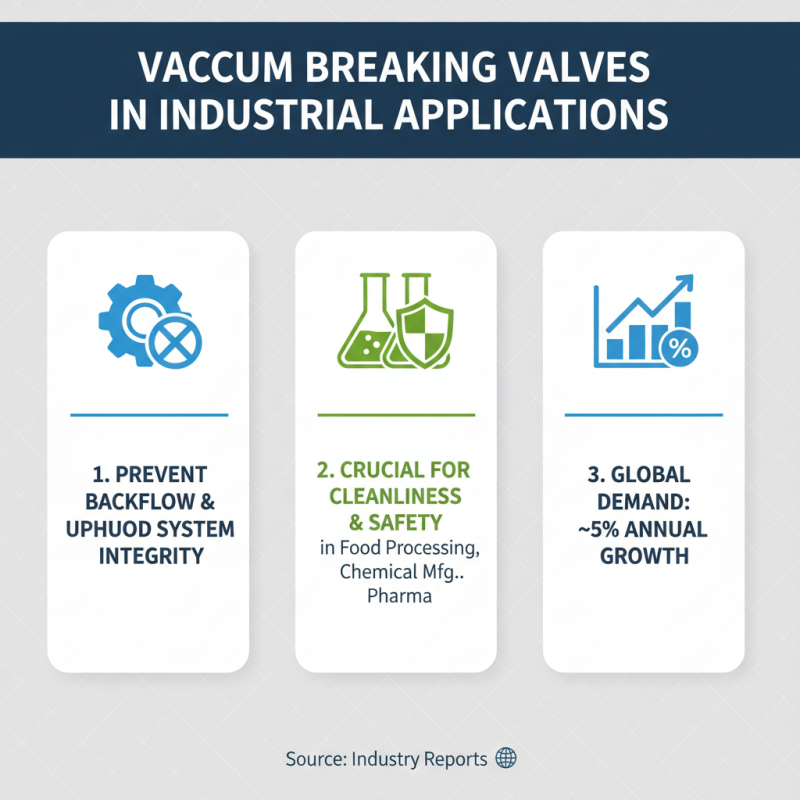
Vacuum breaking valves play a vital role in industrial applications. They prevent backflow and ensure system integrity. This is crucial in sectors such as food processing, chemical manufacturing, and pharmaceuticals. In these industries, maintaining cleanliness and safety is non-negotiable. According to industry reports, the global demand for vacuum breaking valves is expected to grow by approximately 5% annually.
In food processing, for instance, these valves help maintain the quality of products. They allow for controlled vacuum levels, which is essential during packaging. The American Food and Drug Administration (FDA) emphasizes the importance of proper equipment in this sector. Using non-compliant valves can lead to contamination, risking public health and safety. Many companies still overlook these standards.
The installation of vacuum breaking valves in chemical plants is equally critical. They protect against hazardous leaks. However, a study from the Chemical Processing Association indicates that about 30% of plants have outdated or improperly maintained valves. This oversight can result in expensive downtimes and safety incidents. Addressing this issue is essential for increasing operational efficiency and maintaining safety standards in industrial practices.
Key Features of Effective Vacuum Breaking Valves
When exploring vacuum breaking valves, several features stand out. Effective valves prevent vacuum conditions that can harm systems. They should have a reliable sealing mechanism. This ensures no unwanted air enters the system. Additionally, the material used is crucial. Corrosion-resistant materials enhance longevity and performance.
The valve's response time matters greatly. A quick response ensures safety and efficiency in operations. Look for valves that allow for easy maintenance. Regular checks can prevent major issues down the line. There's often a gap between expectation and reality. Some valves do not perform as advertised. It's essential to understand their limitations.
Installation plays a significant role too. Even the best valve can fail if installed incorrectly. A thorough understanding of the system helps in selection. Some might find this process tedious. Yet, a thoughtful approach can save headaches later. Taking time now can improve future results.
Top 10 Vacuum Breaking Valves Showcased at China Import Export Fair
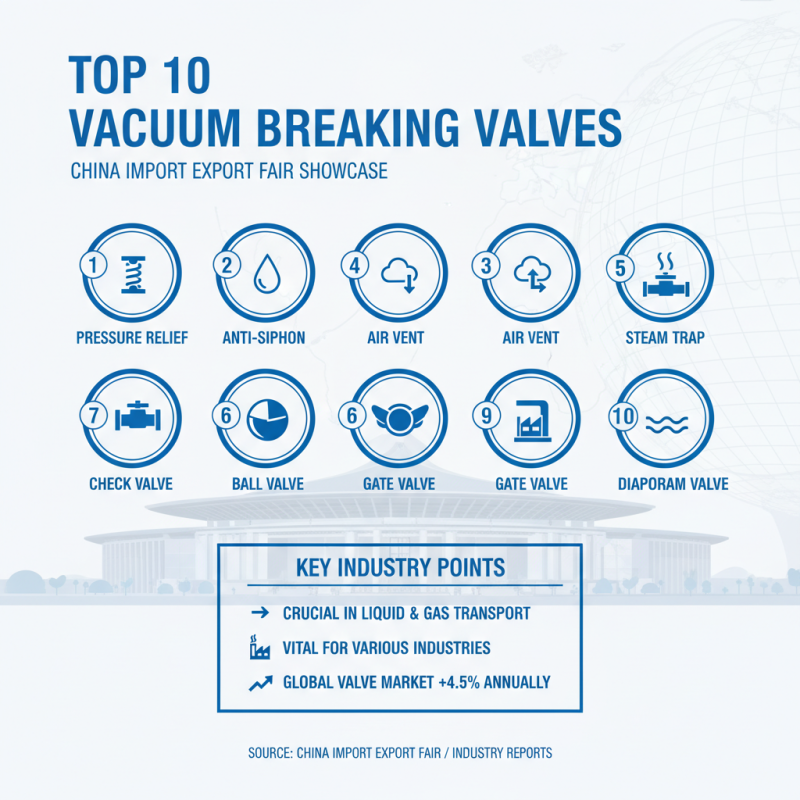
The China Import Export Fair showcased a diverse range of vacuum breaking valves this year. These valves play a crucial role in various industries, primarily in liquid and gas transport. Recent industry reports indicate that the global valve market is expected to grow by 4.5% annually, reflecting rising demand for efficient systems.
Many manufacturers displayed innovative designs. Durability and efficiency stood out. However, not all exhibitors followed rigorous quality control. In this dynamic market, some valves faced criticism for inconsistent performance. Ensuring reliability remains a challenge.
**Tip**: When evaluating vacuum breaking valves, focus on materials and durability. Look for valves made with high-quality metals. Regular testing is essential for maintaining system integrity.
A few exhibitors showcased models with advanced automation features. These designs can reduce operational costs. Yet, they may require high upfront investments. Companies must weigh long-term savings against initial expenses.
**Tip**: Keep track of technical specifications, such as pressure ratings and flow rates. This data is crucial for optimal performance in specific applications. Miscalculating these can lead to inefficiencies.
Comparative Analysis of Leading Vacuum Breaking Valve Brands
As vacuum breaking valves play a crucial role in fluid systems, various brands compete to excel in this market. Analyzing these brands reveals significant differences in quality, design, and functionality. Some valves excel in durability but may lack advanced features. Design-wise, aesthetic considerations often take a back seat to practicality, which can be a drawback for certain users.
Performance is a key area for comparison. Some models offer quick response times, optimizing efficiency, while others struggle under pressure. A common issue is the variability in performance across different conditions. Users find that not all valves maintain consistency, leading to potential inefficiencies. Additionally, price points vary widely, which can affect buyer choices.
Selecting the right product requires careful thought. Users should consider not only performance metrics but also the installation process. Some valves may be difficult to install, complicating maintenance. Reflecting on these aspects is essential for making informed decisions. Therefore, gathering user experiences can greatly enhance understanding, providing insights that specifications alone do not offer.
Future Trends in Vacuum Breaking Valve Technology and Design
The landscape of vacuum breaking valve technology is rapidly evolving. Emerging trends point toward smarter designs and greater efficiency. Modern valves are becoming more compact, integrating advanced materials. These innovations enhance durability and reduce maintenance needs. Automated control features are also gaining traction, allowing precise adjustments in real time.
Another notable trend is sustainability. Manufacturers are exploring eco-friendly materials. This shift responds to growing environmental concerns. Efficiency improvements lead to lower energy consumption. However, some designs may still face challenges, such as balancing performance with cost.
The integration of IoT in valve technology is a significant development. Connectivity allows for precise monitoring and predictive maintenance. However, there are concerns about data security. As technology advances, the need for robust security measures becomes critical. These trends suggest a bright future for vacuum breaking valves, yet continual improvement is necessary.
Top 10 Vacuum Breaking Valves at China Import Export Fair
This bar chart illustrates the sales volume of the top 10 vacuum breaking valves presented at the China Import Export Fair. The data highlights the varying market demand for these types of valves, reflecting potential trends and preferences in the industry.