Top 10 Pilot Operated Diaphragm Valve Manufacturers
Pilot-operated diaphragm valve manufacturers serve industries where accurate flow control and clean operation matter. These valves use pilot pressure to move a diaphragm, helping regulate flow in water treatment, chemical processing, and other demanding systems. Their compact design can be useful in automated lines, but performance depends on correct sizing and installation. Small details matter.
This Top 10 guide introduces manufacturers and compares practical factors buyers can investigate. These include body and diaphragm materials, pressure and temperature ranges, connection options, control response, and available technical support. For example, a valve handling treated water may need different materials from one exposed to corrosive process media. Application fit is more useful than brand recognition alone.
Manufacturer specifications offer a starting point, not a substitute for engineering review. Check product data against operating conditions, and confirm compatibility with the fluid, control system, and maintenance plan. Where claims are unclear, request documentation or discuss the application with the supplier. No list can settle every case. Rankings also reflect selection criteria and available information, so they should not be treated as a universal verdict. Use this overview to build a shortlist, then verify each option against the requirements of your system.
Pilot-Operated Diaphragm Valves: Design and Operating Principles
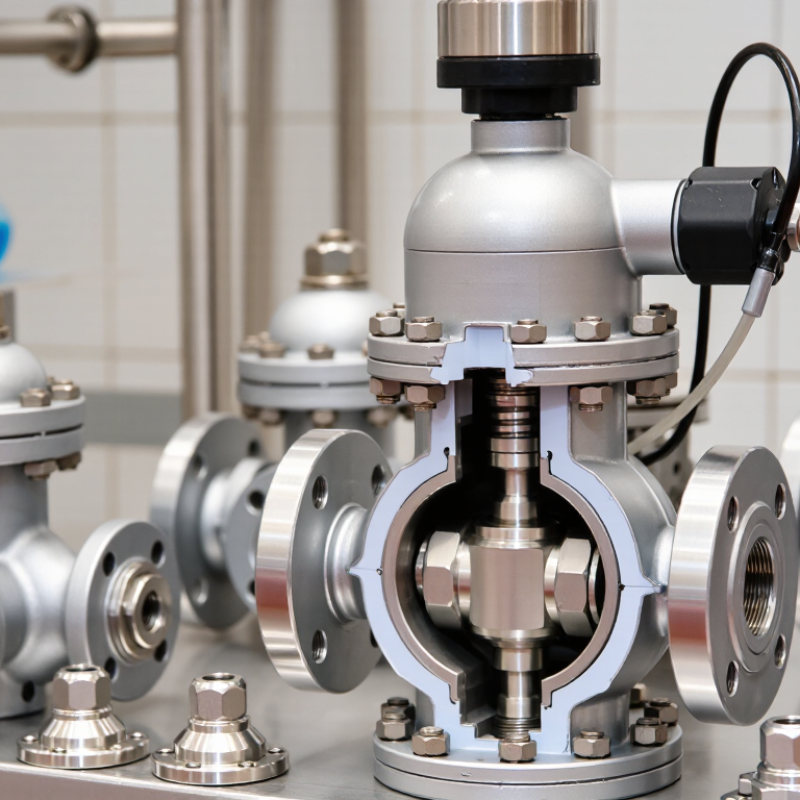
A pilot-operated diaphragm valve uses a small pilot mechanism to control a larger flow path. A flexible diaphragm separates the process fluid from the control chamber. In a common design, inlet pressure fills the chamber above the diaphragm and presses it against the valve seat. The main passage closes. When the pilot vents that chamber, pressure beneath the diaphragm can lift it, allowing flow. The pilot handles little fluid; the diaphragm controls the larger stream.
The exact sequence depends on the valve design and piping arrangement. Some pilots admit pressure to close the valve; others release it to open. Small passages matter. Dirt or scale can restrict them, causing slow response or incomplete movement. During inspection, technicians often check the pilot port, diaphragm condition, and pressure differential—not just the main body. A clean-looking exterior proves little.
Operating limits deserve careful attention. Verify fluid compatibility, temperature, minimum pressure differential, and the specified flow direction. A valve may behave differently when inlet pressure is too low to move the diaphragm reliably. The simple diagram can be misleading. Real installations include pressure fluctuations, long control lines, and trapped air, which may affect response time. These details are easy to underestimate.
Key Criteria for Evaluating Valve Manufacturers
When evaluating pilot operated diaphragm valve manufacturers, start with the operating envelope, not the catalogue headline. Ask for tested pressure limits, flow data, leakage results, and cycle-life evidence for the exact valve configuration. Pilot response can shift with supply pressure and fluid viscosity. Request test conditions, not just a pass certificate. ISO 5208 provides pressure-testing requirements for metallic valves, but diaphragm materials and service conditions still need specific review.
Material compatibility deserves close attention. Compare the diaphragm, body, and seal materials against the actual fluid, temperature, and cleaning routine. A supplier should explain its selection and provide traceability for critical components. Small details matter. Ask for proof. Also check whether the manufacturer can supply replacement diaphragms and technical support over the valve’s expected service life. A low purchase price means little if a suitable spare takes weeks to arrive.
Reliability claims should connect to measurable field or test data. A 2024 global downtime report covering 500 large companies estimated that unplanned downtime can represent about 11% of annual revenue. That figure is not specific to valves, but it shows why component reliability deserves scrutiny. Compare documented inspection procedures, production controls, and failure-analysis practices across suppliers. Be cautious: a polished datasheet cannot predict every installation. Ask how the manufacturer handles unusual duty cycles, and record any assumptions before comparing quotations.
Profiles of the Top 10 Pilot-Operated Diaphragm Valve Manufacturers
Profiles of the Top 10 Pilot-Operated Diaphragm Valve Manufacturers
A useful manufacturer profile starts with the valve’s working conditions, not a glossy catalog. MarketsandMarkets’ 2023 Industrial Valves Market report forecast growth from US$79.3 billion in 2023 to US$101.4 billion by 2028, reflecting wider demand for dependable flow control. Within this field, one manufacturer may focus on compact valves for laboratory skids; another builds corrosion-resistant units for chemical dosing. A third emphasizes cleanable designs for food processing, while a fourth supplies large-bore assemblies for water treatment.
Small details matter. Ask for pressure range, diaphragm material, cycle-life evidence, and documented leakage testing.
The remaining profiles show different strengths: one supplier offers broad actuator options; another supports custom port layouts; a specialist targets high-purity systems; and a regional producer may provide faster replacement parts. One manufacturer stands out for application engineering, while another competes through straightforward, economical designs. These differences can be more useful than a simple ranking. Technical data should identify test conditions, since cycle-life figures are hard to compare otherwise. A polished brochure is not proof. Pilot pressure, fluid temperature, and installation orientation can change performance in the field. Some profiles may lack public test results; that is worth noting, not smoothing over.
Applications and Industry Specializations
Pilot-operated diaphragm valves suit systems where a small control signal must manage frequent flow changes. In water and wastewater plants, they can regulate filtration, backwash, and chemical-dosing lines. The need is substantial: the WHO/UNICEF Joint Monitoring Programme reported that 2.2 billion people lacked safely managed drinking water in 2022, as cited in the UN World Water Development Report 2024. That figure does not measure valve demand, but it shows the scale of treatment infrastructure pressures. Operators should check pressure range, diaphragm material, and solids content before selecting a valve. Small details matter.
Food and pharmaceutical facilities often prioritize cleanability, controlled drainage, and resistance to cleaning chemicals. A smooth wetted path helps, but installation dead legs and poor flushing can still undermine hygiene. Chemical processors have different concerns: temperature, media compatibility, and stable pilot pressure matter more than a polished exterior. Energy applications may require still tighter operating checks. The International Energy Agency’s Global Hydrogen Review 2024 estimates hydrogen demand reached nearly 100 million tonnes in 2023, largely across refining and industry. This is context, not proof that every pilot-operated diaphragm valve is hydrogen-ready. Material and seal compatibility must be verified for each duty. A manufacturer’s specialization is most useful when its application guidance matches the actual fluid, pressure, and cleaning cycle—not merely the industry label.
Comparing Product Range, Quality, and Support
Comparing pilot-operated diaphragm valve manufacturers means looking beyond catalog size. Grand View Research estimated the global industrial valves market at USD 78.2 billion in 2023, with projected growth of 4.8% annually from 2024 to 2030. This broad market figure is useful context, not proof that any supplier excels in diaphragm valves. Compare product range by pressure limits, port sizes, body materials, seal options, and compatibility with your pilot signal. A supplier with clear operating curves and dimensional drawings makes selection easier.
Quality should be judged through evidence, not adjectives. Check material traceability, documented pressure and leakage tests, and consistency across production batches. Ask how the valve responds when supply pressure fluctuates or the process fluid carries fine particles. Support matters just as much: assess spare-part availability, response times, commissioning guidance, and whether technical documents are easy to obtain. One weakness in many comparisons is relying on certifications alone; they do not show how quickly a real service issue will be resolved.
Tips: Send shortlisted suppliers the same duty conditions and request written recommendations. Compare the answers, not only the prices. Confirm replacement diaphragm lead times before purchase. Small detail. A short pilot-line test can also reveal sluggish switching, though it may not represent every installation.
Top 10 Pilot Operated Diaphragm Valve Manufacturers - Comparing Product Range, Quality, and Support
Suggested evaluation criteria weighting for comparing manufacturers. These percentages are an assessment framework, not verified scores or rankings for specific companies.
Product range considers available valve types, sizes, materials, and configurations. Quality and support should be assessed using documented specifications, certifications, service availability, and warranty information.